Too short to count as a break — that's what we assumed. One minute staring out the window, three minutes walking to refill a coffee, five minutes pacing the hallway and back. But in the research world, these scraps of downtime have a name — "micro-breaks" — and a solid body of studies behind them. Checking the answers, it turns out these little breaks were doing more work than we gave them credit for.
Even breaks under 10 minutes moved the needle on fatigue and vigor
In 2022, a research team from the West University of Timișoara in Romania and colleagues published a meta-analysis in PLOS ONE, pooling 22 experimental studies from the past 30 years on micro-breaks — short breaks of roughly 10 minutes or less. The conclusion: groups that took short breaks showed a tendency toward lower fatigue and higher vigor than groups that didn't. The breaks themselves varied — light movement, looking out the window, watching a short video they enjoyed — and the data backed up the idea that even a break that isn't long can push the needle toward recovery from mental and physical wear.
The analysis comes with an honest caveat, though. The effect on task performance was unclear, and the authors note that recovering from demanding, complex work likely requires breaks longer than 10 minutes. In other words, micro-breaks are not a cure-all — they are a tool suited to treating wear as it accumulates. Deep fatigue still needs deep rest.
The costliest assumption is that five minutes "doesn't count"
What struck me about this research was the premise more than the numbers. Most workers write off a five-minute pause as a rounding error unworthy of the word "break," and wait for a day when they can take real time off. But that day doesn't come. It doesn't come, evening arrives, and the fatigue keeps compounding. The micro-break idea flips this: spend the rounding error as is. Instead of resting big after you're spent, slot in small rests before you're spent — this is the smallest unit of the "rest you schedule in advance" we wrote about in our piece on active rest.
Conveniently, the tools are already in place. The "stand up once an hour" from our piece on sitting too much works as a micro-break exactly as it is. Stand, walk to the window, look at something far away, come back. Three minutes. That breaks up continuous sitting, rests your eyes, and treats your fatigue. One stone, three birds.
Three ways to spend your spare change of rest, on purpose
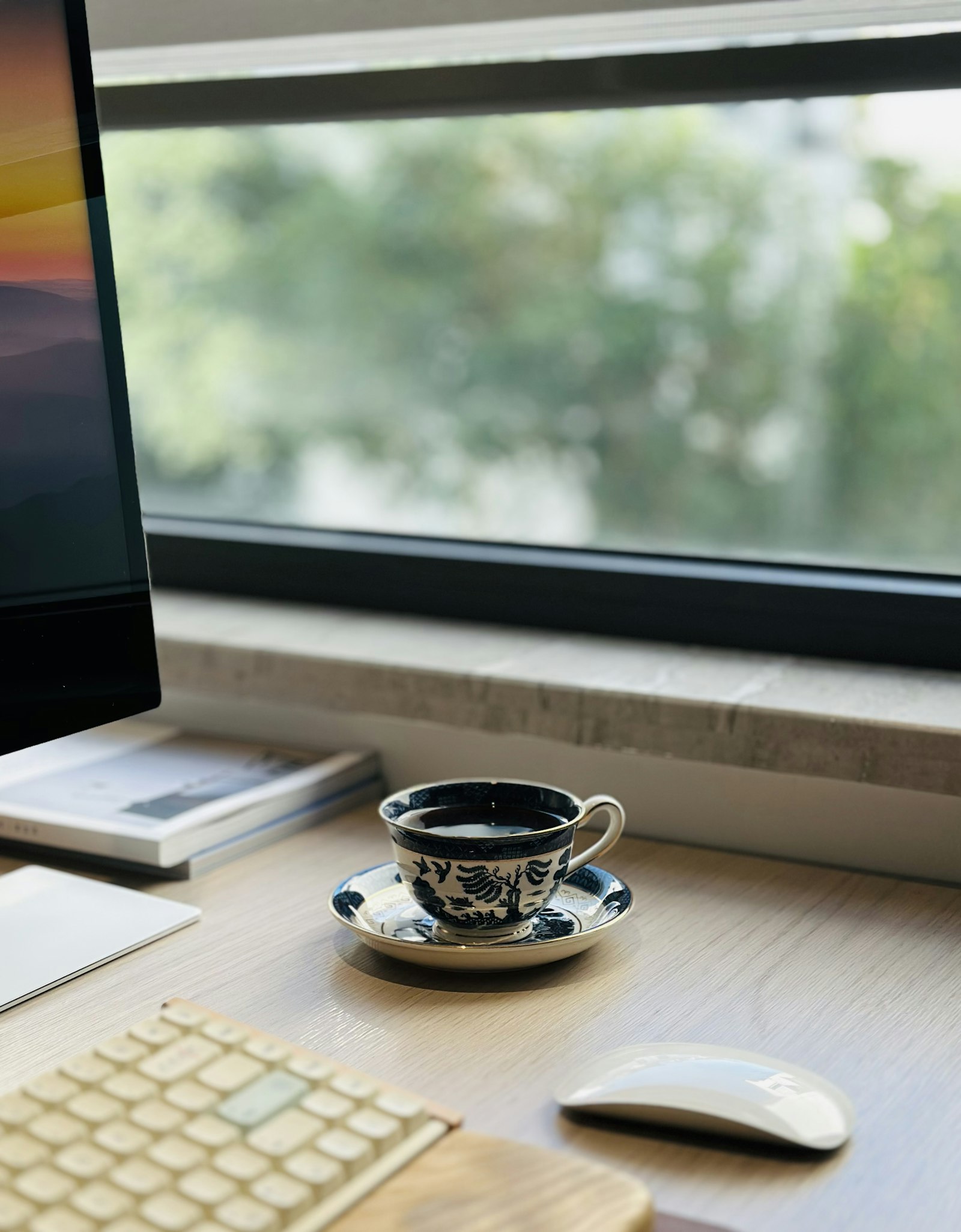
- One minute looking away from the screen at something far off. Focus on the most distant thing outside the window. Your eyes and your mind both get their sense of distance back.
- Three minutes calling the walk to the kitchen a "break." The drink is the excuse. Walk, pour, and don't think about work on the way back to your desk.
- Slot one in precisely when you're stuck mid-task. Grinding for 15 more minutes while blocked is often slower than stepping away and returning in three. Being stuck is the signal for a micro-break.
One thing not to do: patch fatigue that short breaks can't fix with more short breaks. If you keep working days that eat into the real thing — a night's sleep and proper rest days — what needs revisiting isn't the length of your breaks.